
How Much Should St. George Landlords Budget for Rental Property Maintenance?
Last Updated: October 12, 2026
By Virgin River Property Management
How Much Should a St. George Landlord Set Aside for Maintenance?
There is no single maintenance percentage that works for every St. George rental property. A newer home with newer HVAC equipment and appliances may require less near-term maintenance than an older rental with aging systems, older plumbing fixtures, mature landscaping, or equipment approaching replacement age.
A practical maintenance budget should account for routine repairs, preventive maintenance, tenant turnover, landscaping or irrigation where applicable, appliance repairs, HVAC service, plumbing issues, and larger future replacements.
The goal is to keep enough money available that normal property expenses do not become financial emergencies.
In This Guide
- Rental Maintenance Budget at a Glance
- Why One Percentage Does Not Fit Every Rental
- Age, Condition & Major Systems
- Routine Maintenance vs. Capital Replacements
- HVAC Planning & Replacement Reserves
- Plumbing, Appliances, Landscaping & Exterior
- Turnover, Vacancy & Emergency Reserves
- Build a Property-Specific Reserve Plan
- Preventive Maintenance & Inspections
- Track Costs & Review the Budget Annually
- Frequently Asked Questions
- St. George Rental Maintenance Budget Checklist
Rental Maintenance Budget at a Glance
| Budget Category | Examples |
|---|---|
| Routine Maintenance | Minor plumbing, hardware, lighting, small repairs, filters, and normal wear items. |
| Preventive Maintenance | HVAC service, irrigation checks, safety equipment, seasonal inspections, and system monitoring. |
| Appliance Repairs | Refrigerator, dishwasher, range, disposal, washer, dryer, or microwave when provided. |
| Turnover Costs | Cleaning, touch-up work, locks, minor repairs, landscaping, and preparation for the next tenant. |
| Major Replacements | HVAC equipment, water heater, flooring, appliances, roofing, or other long-life components. |
| Emergency Reserve | Unexpected failures that require immediate attention. |
Do Not Use One Percentage for Every Rental
Landlords often look for a simple rule such as setting aside a fixed percentage of rent every month.
That can be useful as a starting framework, but it should not replace an actual property-specific maintenance plan.
Two homes collecting the same monthly rent can have very different maintenance needs.
For example, one property may have:
- A recently replaced HVAC system.
- New appliances.
- Newer flooring.
- Minimal landscaping.
- No major deferred maintenance.
Another property at the same rent may have:
- An older air-conditioning system.
- Aging appliances.
- Older plumbing fixtures.
- Extensive irrigation.
- Flooring nearing replacement.
- Several years of deferred repairs.
Those properties should not necessarily have identical maintenance reserves.
Start With the Age and Condition of the Property
The physical condition of the rental is one of the strongest factors when planning a maintenance budget.
Review the age and condition of major systems and components such as:
- HVAC equipment.
- Water heater.
- Roof.
- Plumbing fixtures.
- Electrical components.
- Appliances.
- Flooring.
- Windows and doors.
- Garage door and opener.
- Landscaping and irrigation.
If several major items are already near the end of their useful service life, the property should generally carry a larger reserve than a recently built or substantially updated rental.
Separate Maintenance From Capital Replacements
One of the easiest ways to underestimate rental expenses is to treat every property cost as the same type of maintenance.
It is more useful to separate smaller recurring repairs from larger long-term replacements.
Routine Maintenance
Routine maintenance includes smaller expenses that occur as part of normal rental ownership.
Examples include:
- Leaking faucets.
- Minor toilet repairs.
- Door hardware.
- Garbage disposal problems.
- Light fixtures.
- Minor electrical issues.
- Small drywall repairs.
- Weather stripping.
- Minor irrigation repairs.
Capital Replacements
Larger components may not fail every year, but they can create substantial expenses when replacement eventually becomes necessary.
Examples include:
- HVAC replacement.
- Water heater replacement.
- Major flooring replacement.
- Roof replacement.
- Major appliance replacement.
- Exterior repainting or repairs.
Owners should plan for both categories rather than using only a small monthly repair allowance.
HVAC Should Be a Major Planning Category in St. George
Air conditioning is particularly important for Southern Utah rental properties because cooling equipment may operate heavily during the hotter part of the year.
Rental owners should know:
- The approximate age of the HVAC system.
- Whether it has been serviced regularly.
- Whether filters are being changed appropriately.
- Whether previous repairs indicate developing problems.
- Whether replacement may be approaching.
An older system does not necessarily need immediate replacement, but an owner should avoid being financially surprised when a major component fails.
Create an HVAC Replacement Reserve Before You Need It
A major HVAC expense can be difficult to absorb when no reserve exists.
Instead of waiting until failure, owners can gradually build a reserve while the current system is still operating.
This turns a future replacement from an unexpected emergency into a planned capital expense.
Plumbing Problems Can Start Small
Rental plumbing maintenance often begins with relatively minor issues:
- Dripping faucets.
- Running toilets.
- Slow drains.
- Garbage disposal problems.
- Loose fixtures.
- Leaking supply lines.
Small water issues should not be ignored.
Prompt repair can help prevent damage to cabinets, flooring, drywall, or surrounding areas.
Budget for Appliance Repair and Replacement
If appliances are included with the rental, the owner should expect that they will eventually require repair or replacement.
Common owner-provided appliances can include:
- Refrigerator.
- Dishwasher.
- Range.
- Oven.
- Microwave.
- Garbage disposal.
- Washer and dryer.
Keep a simple list showing the approximate age of each appliance.
That allows you to identify when several appliances may be approaching replacement at roughly the same time.
Landscaping and Irrigation Can Create Ongoing Costs
Some St. George rentals have relatively simple desert landscaping, while others have grass, trees, shrubs, irrigation, or community landscaping requirements.
Potential expenses may include:
- Drip-line repairs.
- Sprinkler repairs.
- Valve replacement.
- Plant replacement.
- Tree trimming.
- Weed control.
- Landscape cleanup.
Even low-water landscaping is not necessarily maintenance-free.
Remember Garage Doors, Gates, and Exterior Components
Exterior mechanical items are easy to overlook until they stop functioning.
Depending on the property, owners may need to maintain:
- Garage door openers.
- Garage door springs.
- Exterior locks.
- Side gates.
- Fence hardware.
- Patio doors.
- Exterior lighting.
These expenses should be included in the larger property-maintenance picture.
Turnover Is Part of the Maintenance Budget
When one tenant leaves and another moves in, the property frequently requires some level of preparation.
Potential turnover expenses include:
- Cleaning.
- Carpet or flooring service.
- Paint touch-up.
- Drywall repairs.
- Lock or key work.
- Minor plumbing repairs.
- Landscaping cleanup.
- Appliance repairs.
- General handyman work.
Turnover expenses can occur even when the previous resident took reasonable care of the property.
For a detailed turnover process, read our guide on how to prepare a St. George rental property for new tenants.
Vacancy and Maintenance Often Happen Together
Turnover maintenance can create another financial effect: vacancy.
If repairs take longer than expected, the property may remain off the rental market or unavailable for move-in.
That means owners should consider both:
- The cost of the repair itself.
- The potential lost rent while work is being completed.
Read our guide on how long it can take to rent a house in St. George for additional vacancy considerations.
Build a Separate Emergency Reserve
Not every maintenance issue can be scheduled months in advance.
Rental properties can experience unexpected problems such as:
- Air-conditioning failure.
- Water leaks.
- Water heater failure.
- Electrical problems.
- Broken appliances.
- Garage door failure.
A dedicated reserve gives the owner the ability to address urgent property issues without relying on that month's rental income alone.
Do Not Spend the Entire Rent Check
Monthly rent is gross property income, not automatically spendable profit.
Some of that income may eventually be needed for:
- Maintenance.
- Repairs.
- Vacancy.
- Turnover.
- Taxes.
- Insurance.
- Capital replacements.
- Professional services.
Insurance is a separate ownership expense from routine maintenance and repair reserves. For coverage considerations, see our Utah landlord insurance guide.
Owners who treat the full rent payment as immediate profit can be caught off guard when a larger property expense occurs.
Use a Property-Specific Reserve Plan
A more practical approach is to evaluate each major component individually.
Create a list that includes:
- Component.
- Approximate age.
- Current condition.
- Recent repair history.
- Likely future replacement need.
This creates a basic roadmap of where future maintenance spending is most likely to occur.
Example Maintenance Planning Worksheet
| Component | What to Track |
|---|---|
| HVAC | Age, service history, repairs, filter routine, expected future replacement. |
| Water Heater | Age, leaks, corrosion, performance, replacement planning. |
| Appliances | Age, prior repairs, reliability, expected replacement. |
| Flooring | Condition, wear, staining, damage, future replacement. |
| Plumbing | Leaks, fixture condition, recurring problems. |
| Exterior | Paint, stucco, doors, windows, roof, gates, lighting. |
| Landscaping | Irrigation, trees, plants, cleanup, community requirements. |
Preventive Maintenance Can Reduce Avoidable Problems
Maintenance planning should not consist only of waiting for something to break.
Routine inspections and preventive service can sometimes identify issues while they are smaller and easier to address.
Examples may include:
- Checking HVAC operation.
- Reviewing filter condition.
- Checking visible plumbing.
- Inspecting irrigation.
- Testing appliances during turnover.
- Reviewing exterior condition.
- Checking doors and locks.
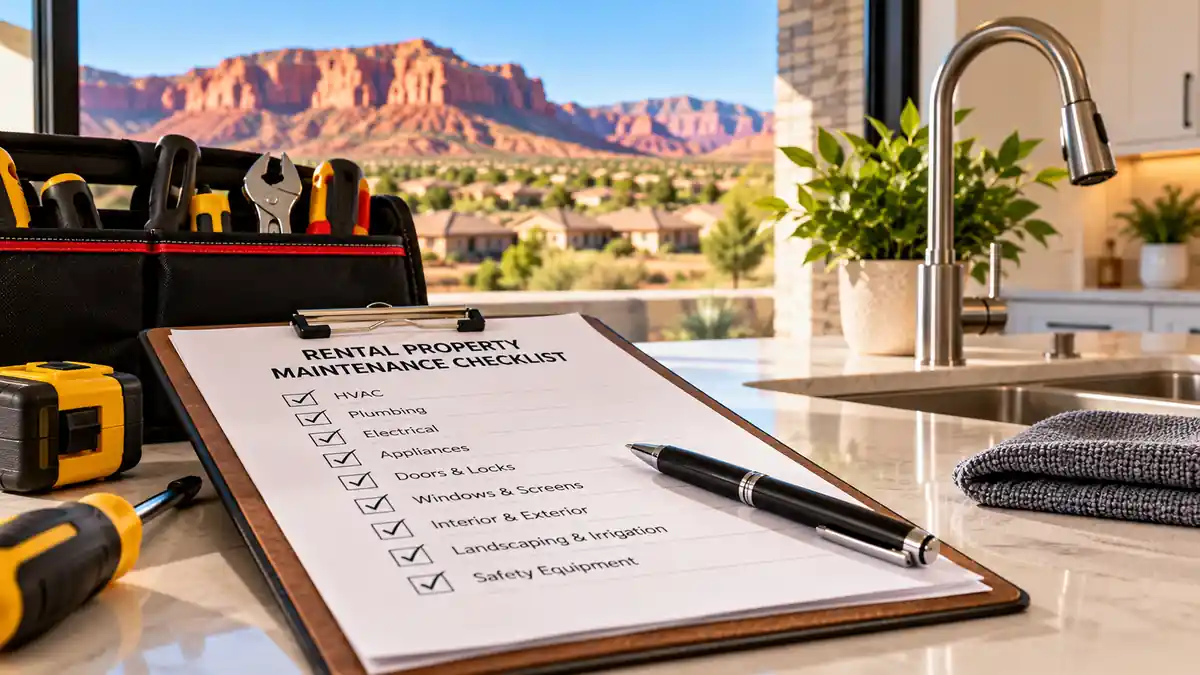
For a broader inspection list, see our St. George rental property maintenance checklist.
Rental Inspections Can Help With Maintenance Planning
Regular property inspections can help owners identify issues that may not have generated a maintenance request yet.
An inspection may reveal:
- Minor leaks.
- Exterior wear.
- Landscaping problems.
- Damaged screens.
- Deferred maintenance.
- Areas requiring future attention.
Read our guide to rental property inspections in St. George for more information.
Do Not Automatically Choose the Cheapest Repair
The lowest-cost repair today is not always the lowest-cost decision over the life of the rental.
Owners should consider:
- How old the component is.
- Whether the problem has happened before.
- The cost difference between repair and replacement.
- Whether another repair is likely soon.
- How downtime affects the tenant.
Repeated
Own a Rental Property in Southern Utah?
Virgin River Property Management provides professional residential property management throughout St. George and Southern Utah. Find out what your property may rent for and how VPM can help manage it.